Blue Hole
All the Bright PlacesThe Blue Hole is a secluded lake near Prairieton that gathers several strands of the novel into one landscape: the exhilaration of wandering, the intimacy between Theodore Finch and Violet Markey, and the danger that Finch cannot always keep at a distance. On their first visit, the lake seems like a private world they have found together. Later, its blue depths become the place where Finch disappears and where Violet searches for him, returning the site to the story as a landscape of grief rather than adventure.
Setting and Local Legends
The Blue Hole is a three-acre lake on private property, reached by climbing an embankment and descending a hill to a broad, round pool ringed by trees. On the first warm day after winter, the air is mild enough that Finch and Violet need only sweaters. The setting feels secluded and still; Finch imagines them as the only two people on earth, expressing a wish that the temporary privacy of the place could become permanent. The lake’s shape and isolation make it feel distinct from the ordinary roads and houses around it, while the water’s vivid blue becomes an image Violet will later recognize and associate with Finch.
Finch introduces the lake through the stories told about it. It is said to be bottomless, or to have quicksand at its bottom; another legend claims that a force in its center pulls swimmers into an underground river flowing to the Wabash. Other versions make it a passage to another world, a hiding place for pirates’ treasure, or a dumping ground for Chicago bootleggers’ bodies and stolen cars. He recounts a story of teenage boys who disappeared while swimming there in the 1950s, and of two sheriff’s deputies who explored the lake in 1969. They found no cars, treasure, or bodies, and did not find the bottom; they did encounter a whirlpool that nearly pulled them under. Finch also offers a geological explanation: he describes such blue holes as caverns formed during the last ice age. The competing accounts—geology, local legend, and imagined passage to another world—make the lake both a physical place and an open-ended mystery.
Finch and Violet’s First Visit
Finch has brought offerings from their lives beyond the lake: the stubs of Violet’s second SAT pencils and four broken guitar strings. The objects give the visit a personal, improvised character. Here they are not simply surveying a destination; they are carrying pieces of their ordinary lives into a place that seems to invite a different scale of feeling. Violet asks what the place is, and Finch answers by laying out its stories before changing into swimming clothes. He presents the lake’s myths as part of what makes having such a place nearby extraordinary.
The two leap into the water hand in hand. Below the surface it is unusually clear and blue, and they swim together, still holding on as they descend. The deeper they go, the darker the water becomes. Violet eventually tugs Finch back toward the surface, and they break through the water to breathe. Her intervention establishes an important limit within the scene: exploration can be shared, but it still depends on attending to one another’s need to return.
For Finch, however, depth has a particular attraction. He describes water as a way to shut everything else out and as a means of keeping the Asleep from coming on. He wants to go deeper, and when Violet is no longer beside him below the surface, the thought of her and the burning in his lungs become reasons to stop. He struggles back toward the light, apologizing to her in his thoughts and promising not to leave her again. When he finally surfaces, Violet is on the bank, crying. She tells him how frightened she was and that she had searched for him repeatedly, diving until she had to come back for air. The same water that had briefly offered Finch relief has become, for Violet, an immediate threat of losing him.
A Place of Confession and Conflict
The lake remains the setting for another turn in their relationship. After Finch speaks about his anger, he urges Violet to release what she is feeling rather than keep it inside. He yells and smashes a rock against the wall around the hole; then he hands Violet a rock. She begins throwing the stones and shouting too, and the pair storm around the banks, breaking things and giving physical form to feelings they have struggled to express. Their movement through the landscape is no longer the quiet, linked swimming of their first encounter. It is noisy, forceful, and shared.
Violet then asks what they are to each other and what is happening between them. Finch kisses her, and she eventually kisses him back. Yet the moment does not settle into uncomplicated reassurance: Finch pushes her away. The lake holds both the arrival of new intimacy and its instability. Their connection becomes more explicit here, but the scene’s abrupt shift from anger to closeness, followed by Finch’s withdrawal, prevents the place from serving as a simple romantic sanctuary.
Violet’s Search and Return
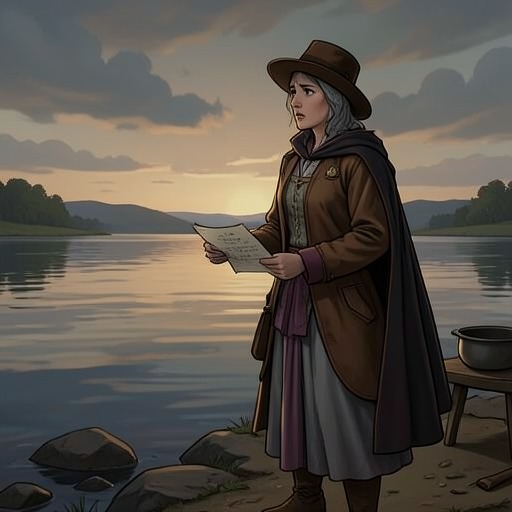
When Violet comes back to the Blue Hole, the weather and her purpose have changed. In April, under a warm blue sky, she walks past the no-trespassing signs, climbs the embankment, and descends to the pool. Its water reminds her of Finch’s eyes. The place is deserted and peaceful enough that she nearly turns back, but then she sees his clothes arranged in a neat stack. She removes her own shoes and coat, leaves her keys and phone beside the clothing, and dives in.
Violet swims with her head above water, then repeatedly dives and searches the clear depths. She goes down as far as she can, comes up for air, and tries again, swimming back and forth across the lake. Finch had been able to hold his breath for minutes; Violet cannot stay under as long. The repetition turns his former feat into a measure of his absence. At some point she understands that he is gone, not hidden somewhere in the lake or waiting to be found. Even after that recognition, she continues diving until exhaustion forces her onto the bank. She calls 9-1-1, while imagining that Finch has found the other world described in the lake’s legends. The fantasy does not undo her knowledge of his death; it gives grief an image through which she can approach what cannot be reversed.
On June 20, Violet returns once more. She stands on the grassy shore, half expecting to see Finch, then takes off her shoes and swims through the water with goggles on. She looks for him despite knowing she will not find him. When she surfaces beneath the wide summer sky, she imagines him wandering in another world, seeing things no one else can imagine. The Blue Hole has not become safe or ordinary through these returns. Instead, Violet uses the place where she lost Finch to enact a repeated act of searching, while changing the meaning of that search: first an attempt to find him in the water, then a way to remember him without mistaking memory for rescue.
Narrative Significance
The Blue Hole’s significance rests on the tension between its physical depth and the meanings Finch and Violet attach to it. For Finch, water can quiet the outside world and hold off the Asleep, but the desire to keep descending also brings him close to danger. For Violet, the lake first offers a shared adventure and a moment of intimacy, then becomes the site of fear, discovery, and mourning. Its legends of disappearance and passage to another world echo the story’s movement between what can be known and what remains beyond explanation. By returning Violet to the same water in different seasons, the novel makes the Blue Hole a recurring measure of change: the place stays recognizable, while the people who enter it—and what they hope to find—do not.